

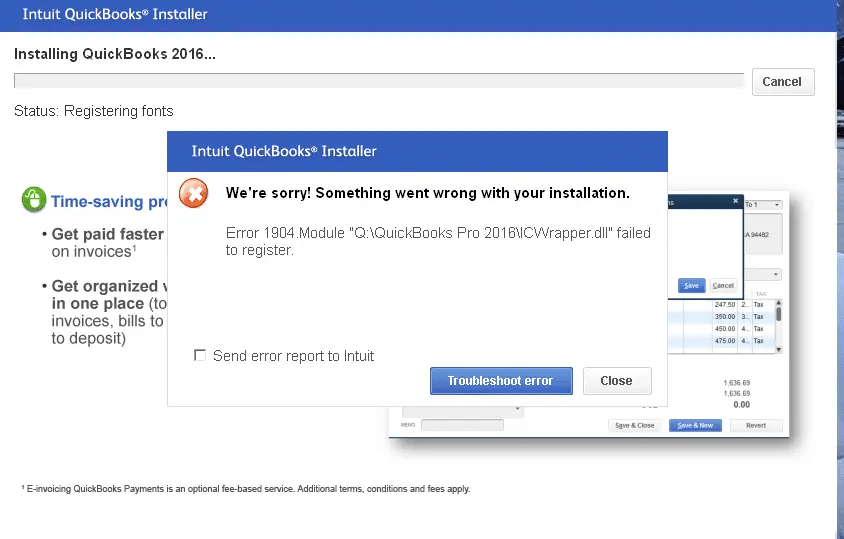
Installation errors have a way of stopping you in your tracks and QuickBooks Error 1904 is particularly disruptive because it appears right in the middle of the installation process with the message: “Error 1904: [file path / name / extension] failed to register.” Whether it’s a .dll file, qbupdate.exe, or the IcWrapper.dll that’s failing to register, the installation either stops entirely or completes but leaves QuickBooks in a broken state.
The underlying cause tends to be one of a few things: a damaged Windows component like .NET Framework or MSXML, missing admin permissions during installation, or a conflict with Bitdefender or Adobe Flash Player. There are also specific variations of this error tied to the QBversionTool.dll that need a slightly different approach. This article covers all of it 4 main solutions plus 3 special cases with condition-specific fixes. For immediate help, our team is available at +1-888-510-9198, and they will provide answers to all your queries.
What is QuickBooks error 1904?
As we mentioned earlier, QuickBooks error 1904 is basically an installation error that appears on the screen stating:
| Error | Description |
|---|---|
| Intuit QuickBooks Installer | Error 1904: [file path / name / extension] failed to register, |
| Warning | Error 1904: IcWrapper Dll Failed To Register |
You can come across this issue in QuickBooks if the company files are missing from the database. As a consequence of this error, the system might not work properly and the installation process might stop in the middle. This QuickBooks error can also arise while QB Desktop installation after upgrading the operating system such as Windows Vista to Windows 7. Or if the system wasn’t rebooted after the QuickBooks upgrade.
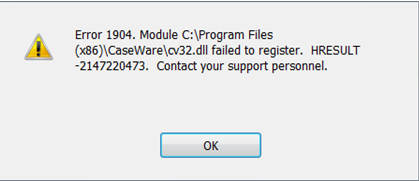
In case, there are multiple QB errors appear on the display and they exclusively state the ICWrapper.dll, qbprefs.dll, RcnFndRequestHandler.dll & qbupdate.exe (among others), then the trouble is possibly caused by the Microsoft Visual C++ damaged component.
Possible Causes of QuickBooks Error 1904
There are a bunch of reasons behind QuickBooks error 1904. Let us have a look:
- It is caused when your company files get damaged or corrupted suddenly. The settings of the file may be incorrect.
- Sometimes, this QuickBooks error 1904 could be caused due to having several multiple issues and you might receive messages mentioning specific files such as dll, qbupdate.exe & many more. This problem is usually caused when the file or a folder is damaged the MS Visual C++.
- After upgrading the operating system from one version to another, you might receive this error as it is possible that you have not rebooted your computer system after upgrading.
Major signs of QuickBooks error code 1904?
You can identify the issue using the below signs:
- Some crucial company files are missing
- The system is getting slow
- If the updates on the system aren’t available automatically
- If the Hard drive and other read-write devices are facing issues related to permissions
- A repeated message about “Error 1904: [file path / name / extension] failed to register” is seen on the screen
Important Points to Remember
Before you perform the steps below, make sure to keep the following pointers in mind:
- One must update Windows on all the systems that are running QuickBooks in multi-user mode.
- Update QuickBooks on server and workstations, in case of multi-user mode.
- Ensure that you run QuickBooks in admin mode
- Refresh the internet and LAN connectivity.
How to Fix Error: 1904 when you install QuickBooks Desktop?
In order to troubleshoot QuickBooks log in error 1904, Execute the following fixation steps in the order shown to resolve the problem.
Solution 1: Run the QuickBooks Install Diagnostic tool
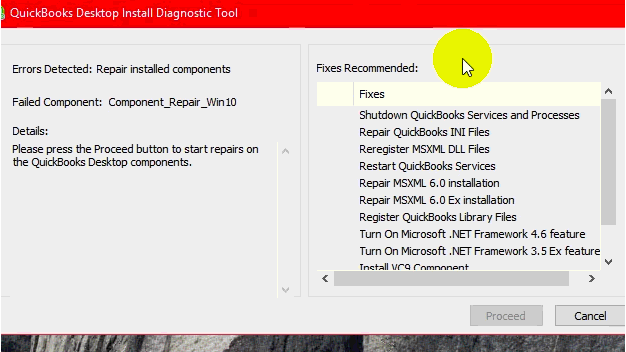
- Select the “Ignore” tab on the error message & let the QB installation complete. DO NOT open QuickBooks software.
- Restart the computer.
- If the QuickBooks installation is not complete, then download & run the QuickBooks Desktop Install Diagnostic Tool.
- Reboot the system.
- If running the tool unable to fix the error, then activate the built-in Administrator & install QuickBooks software under the built-in administrator account.
You may also like: How to Troubleshoot QuickBooks Error Code 15215?
Solution 2: Activate the built-in or hidden administrator
Follow the given steps to activate the built-in administrator:
Step 1: Activate the Built-in Administrator
- Tap the “Windows” button on the keyboard.
- Type in the “CMD”. Right-click on the “CMD/ Command Prompt/ cmd.exe” & choose the “Run as Administrator”.
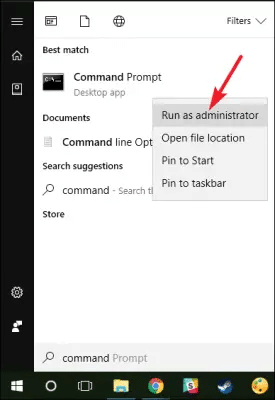
- In the command prompt window, enter the “net user administrator /active:yes” and hit the “Enter” tab.
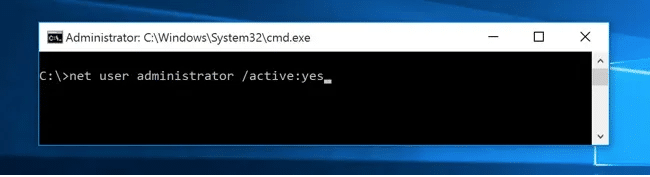
A quick tip: In case you see any error, type in the “net user administrator /active” instead.
Step 2: Switch to the built-in Administrator Account
- Press the “Ctrl+Alt+Delete” on the keyboard simultaneously, then choose the “Switch User Windows 8 users”: hit the “Windows” button & choose the user icon on the upper right of the display.
- Hit the “Ctrl+Alt+Delete” at a time & choose the “default Administrator account” icon.
Step 3: Hide the built-in Administrator Account
- Click on the “Windows” button on the keyboard.
- Type in the “CMD” in the search box. Press right-click on the “CMD/ Command Prompt/ cmd.exe” & choose the “Run ad Administrator” tab.
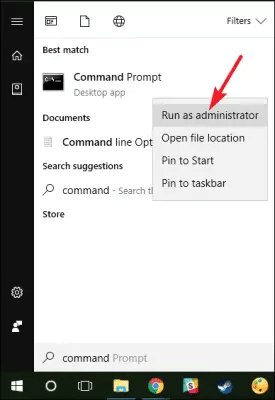
- In the command prompt screen, type in the “net user administrator /active:no” and hit the “Enter” key.
4: Change installation directory security settings
- Browse to the “C:\Program Files\Common Files”.
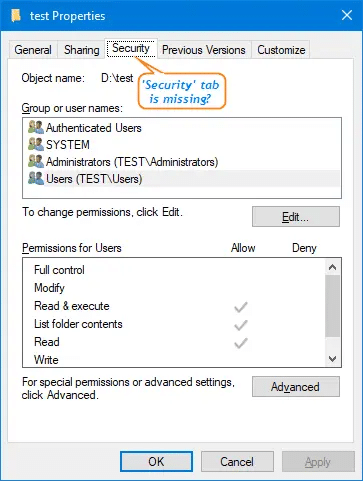
- Perform right-click on the “Common Files” folder & choose the “Properties” tab.
- Select the “Edit” icon under the “Security” tab, & then choose the “Users” under the “Group or user names” icon.
- Under the “Permissions for users” tab, choose the allow for the following permissions:
- Modify
- Read and Execute
- List Folder Contents
- Read
- Write
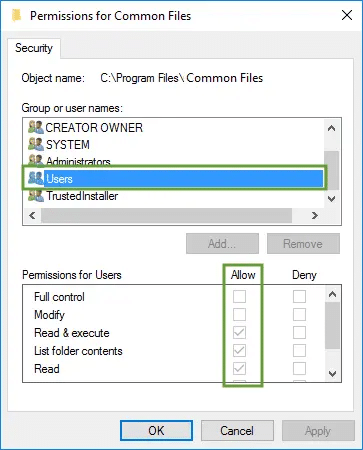
- Choose the “Apply” and then “OK” button.
5: Do a QuickBooks Installation
- Install QuickBooks Desktop once again.
- After installing QuickBooks accounting software, switch to the original user log in.
Important Note: If you precisely followed the entire steps, then you don’t have any of the following special cases, & you’re still getting the same error, we suggest that you contact the QuickBooks Experts to diagnose the hassle.
Solution 3: Manually configure damaged Windows components
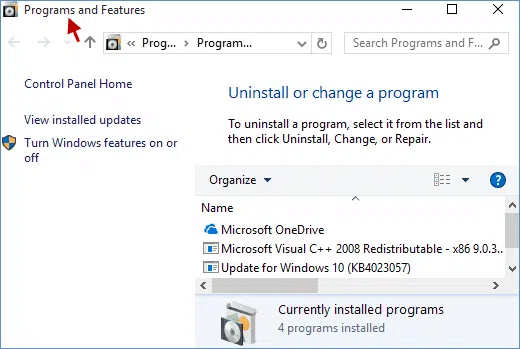
Step 1: Repair the .NET Framework
- To fix this, the user needs to head to the control panel and fix issues related to Microsoft.net framework
- Now, from the list of installed programs, select .Net framework
- Also, move to the programs and features page
Step 2: Register the MSXML.dll
For 64 Bit OS
- The user needs to click on the start tab
- And then enter CMD into the search bar
- The next step is to right-click the CMD icon and this will open the context menu
- Select run as admin tab
- After the window opens the command prompt, enter cmd and get the C: root directory
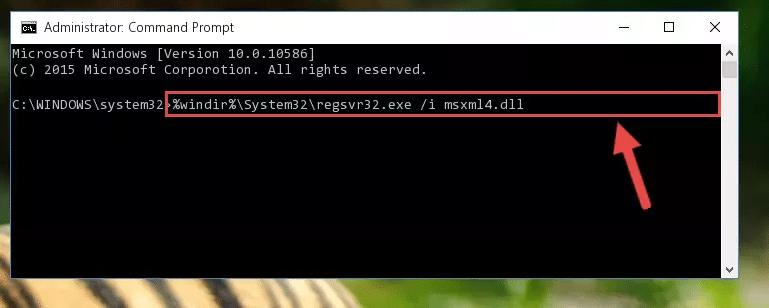
- Now, press the keyboard shortcut “CD windows/ syswow64 /”.
- After locating syswow64, enter “regsvr32 MSXML6.dll”
- Now hit enter again
- Try to install QuickBooks and check if the issue
For 32 Bit OS
- At first, press windows + R to open the run window
- Click on enter to add cmd to the box
- Enter “regsvr32 MSXML6.dll”
- Hit the enter tab again to proceed
Solution 4: Updating the Operating system
For Windows 10
- The first step is to click on Windows Start tab
- And then head to the update and security tab
- Once done with that choose Windows Update tab
- And click on Check for updates
- This will show any update, if available
- After that select the updates you want and click on update tab
- Reboot your system
- Now, launch QuickBooks after the upgrade gets installed properly and check if the issue gets resolved or not
For Windows 8.1
- Head to the settings tab
- And then, click on change PC settings
- Now, click on update and recovery and choose windows update
- The user should now, click on check now link
- Choose view details tab
- You might a bunch of options with the download sizes
- Click on the suitable one
- And then reboot the system after the update ends
- Login to QuickBooks again
Additional Alternatives to Fix QuickBooks Installation Error 1904 (Failed to Register)
- Head to the antivirus or security software
- Fine-tune the internet bandwidth to download the installation source accurately
- Uncheck shared updates option in multi-user mode
You may also read: How to Fix QuickBooks Installation Errors for Windows and Mac?
Special Cases:
If the standard solutions above didn’t work, your situation might match one of these 3 specific scenarios. Find the one that fits and follow its steps:
Condition 1: If you have Bitdefender:
While QuickBooks installation on the computer in the presence of Bitdefender, you suppose to add the C:\Program Files\Common Files (for 32-bit machines) or C:\Program Files\Intuit (C:\Program Files(x86)\Intuit (for 64-bit machines) to the Bitdefender exclusion list. Turning off or disabling the Bitdefender will not resolve this problem.
Condition 2: If the error arises while Adobe Flash Player installation
- Download QuickBooks Install Diagnostic Tool and install it on your system.
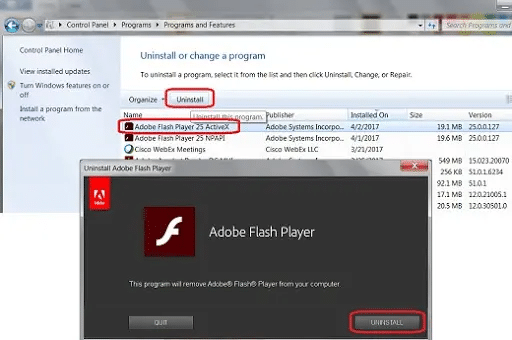
- Uninstall the Adobe Flash Player.
- To open the “Run” window, press the “Windows + R” on the keyboard simultaneously.
- Type in the “Control Panel” & hit the “OK” tab.
- Choose the “Uninstall a program” icon.
- Choose the “Adobe Flash PlayerActiveX”.
- Hit the “Uninstall” button.
- Follow the instruction to complete the whole process.
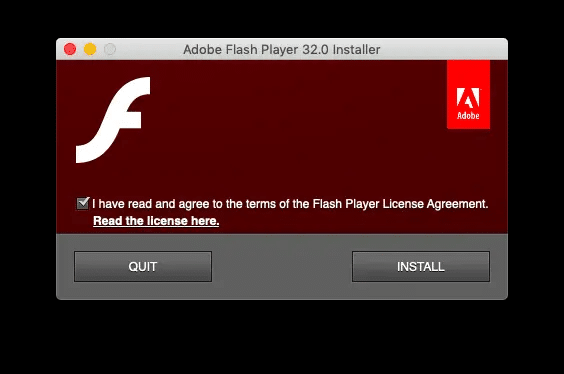
- Download & install the Adobe Flash Player from official website www.adobe.com.
Condition 3: If the error references QBversionTool.dll
Solution 1: Use QuickBooks Install Diagnostic Tool
- Download & run QuickBooks Install Diagnostic Tool.
- Reboot the computer & reinstall the QuickBooks.
Solution 2: Check permissions & use hidden (built-in) Administrator account
Make a notepad file & save it to the installation directory to verify the permissions:
- Open the “Run” window, Hit the “Windows + R” on the keyboard at the same time.
- Type in the “Notepad” & click on the “OK” button
- Type in the “QBTEST” in the notepad file.
- From the “File” menu, click on the “Save As” icon.
- Save the file to the installation directory.
- 32-bitC:\Program Files\Common Files.
- 64-bitC:\Program Files(x86)\Common Files.
Some Additional Guidelines
- If you are working with QB Database Manager only, then the given solutions would not work and you would be required to install the actual exe.
- The error occurs mostly in Microsoft Windows when the installation is not done using the admin credentials.
- Before installing Avalara Avatax, install exe on the server.
- The problem can also be caused if you try to Install the connector on a Server without QB exe installed on it.
- After clicking OK on the error, the installation must say that it was completed successfully.
- Go to AvaTax Configuration (File > AvaTax > Configuration)
- Run the QuickBooks Software as Administrator
- Select your Test Connection option.
Also read: Resolve QuickBooks error code 15223
Conclusion
For most users, running the QuickBooks Install Diagnostic Tool (Solution 1) clears Error 1904 without needing to go any further. If that doesn’t work, Solution 2’s built-in administrator approach handles the majority of permission-related cases. Solutions 3 and 4 are there specifically when the issue is tied to damaged Windows components or an outdated OS.
If you matched your situation to one of the 3 special conditions and the fix still isn’t working, our certified QuickBooks ProAdvisors are available at +1-888-510-9198 for direct, hands-on help, we’ll identify exactly which component is failing to register and get it resolved quickly. Visit our QuickBooks technical support page for more details.
Similar Articles:
How to Fix QuickBooks Banking Errors 103 and 310?
How to Fix QuickBooks Error code 17337?
Steps to Fix QuickBooks Banking Error 102
FAQs – QuickBooks Error 1904
QuickBooks Error 1904 refers to an issue that occurs when QuickBooks is unable to register or start a component or module during installation or while opening the software. This error may appear as “Error 1904: [file path/name] failed to register.”
If you’re facing QuickBooks Error 1904, you can try the following steps to resolve the issue:
Install the latest Windows updates
Disable User Account Control (UAC)
Run the QBInstall Tool
Reinstall QuickBooks Desktop If the issue still persists, you can contact our QuickBooks Error Support team at +1-888-510-9198 for assistance.
QuickBooks Error 1904 may be caused by several factors including damaged or missing system files, outdated Windows operating system, and conflicts with other software installed on your computer.
Yes, QuickBooks Error 1904 is a common issue faced by many QuickBooks users. It is most likely to occur during the installation process or when trying to open the software.
Yes, you can get QuickBooks Error 1904 resolved by a QuickBooks expert. Our QuickBooks Error Support team is available 24/7 at +1-888-510-9198 to assist you with resolving the issue and ensuring smooth functioning of your software.
Error 1904 can occur during both a fresh installation and a repair installation. Since both processes involve registering QuickBooks’ component files with Windows, if any of those files are blocked by security software, lack admin permissions, or run into a damaged Windows component, the 1904 error can surface either way. The same 4 solutions in this guide apply regardless of whether you’re doing a first-time install or repairing an existing one.
Bitdefender uses an aggressive file interception approach that can block QuickBooks from registering certain .dll files in the C:\Program Files\Common Files directory during installation. Other antivirus programs may flag the same files but allow the registration to proceed after a prompt Bitdefender tends to block silently without notification. The fix isn’t to disable Bitdefender (which doesn’t work for this issue), but to add the specific QuickBooks installation directory to Bitdefender’s exclusion list, as outlined in Condition 1 above.
Yes, it does matter. As noted in Solution 1, clicking “Ignore” allows the installation to continue and potentially complete, which then lets you run the Install Diagnostic Tool afterward to fix the unregistered files. Clicking “OK” typically stops the installation at that point. If you’ve already clicked “OK” and the installation didn’t complete, download and run the QuickBooks Install Diagnostic Tool directly it’s designed to handle exactly this situation.